
What Is a Marketing Strategy?
A marketing strategy is a structured plan that helps a business identify its target audience, communicate its value, promote its products or services, and achieve its business goals. It provides direction for marketing activities and helps businesses use their time, budget, and resources effectively.
In today’s digital world, a strong marketing strategy combines an understanding of customer needs with the right digital channels. These may include search engine optimization (SEO), social media marketing, content marketing, email marketing, website development, and paid advertising.
At Sajna.digital, we believe that successful marketing starts with understanding your business and your customers. By identifying your goals, researching your audience, and choosing appropriate marketing methods, we can help you develop a strategy that supports sustainable business growth.
Whether you run a small shop, a startup, a service-based business, or an established company, a clear marketing strategy can help you stand out in a competitive marketplace.
Why Is a Marketing Strategy Important?
A marketing strategy gives your business a clear direction. Instead of promoting your products randomly, you can focus on activities that support specific objectives.
1. Builds Brand Awareness
Brand awareness helps customers recognize and remember your business. Consistent branding, engaging content, and regular communication can make your business more familiar to potential customers.
2. Reaches the Right Audience
Understanding your ideal customers helps you create relevant messages and choose the marketing channels they use most often.
3. Generates Leads and Sales
A well-planned strategy guides potential customers from discovering your business to enquiring about your services or making a purchase.
4. Improves Marketing Efficiency
Planning helps you prioritize marketing activities, allocate your budget wisely, and avoid spending time on channels that do not support your objectives.
5. Supports Long-Term Growth
By tracking performance and improving your approach over time, you can build stronger customer relationships and create more consistent opportunities for growth.
Our Marketing Strategy Services
At Sajna.digital, marketing strategy can bring together several digital marketing services to create a consistent and goal-oriented online presence.
1. Business and Market Research
Every effective marketing strategy begins with research. We consider your business objectives, products or services, competitors, target audience, and market opportunities.
This process helps identify your strengths, understand customer expectations, and determine how your business can communicate its unique value.
2. Target Audience Identification
Your marketing becomes more effective when you understand who you want to reach.
We can help identify your ideal customers by considering:
- Age groups and general demographics.
- Geographic location.
- Customer interests and needs.
- Buying behaviour.
- Common problems and expectations.
- Preferred digital platforms.
For example, a local clothing boutique in Mannarkad may focus on nearby shoppers through Instagram content, local search visibility, and seasonal promotions.
3. Search Engine Optimization Strategy
SEO helps potential customers discover your website through relevant organic search results.
An SEO strategy may include keyword research, website optimization, technical SEO, local SEO, and the development of useful website content.
For businesses serving Mannarkad and nearby areas, location-relevant content can help communicate where services are available and what customers can expect.
4. Social Media Marketing Strategy
Social media marketing helps businesses build relationships with their audiences through useful, entertaining, and informative content.
We can help plan social media activities such as:
- Content calendars.
- Brand-focused posts.
- Reels and short-form videos.
- Educational content.
- Product and service promotions.
- Audience engagement.
- Campaign performance reviews.
A consistent social media strategy can help your business maintain a recognizable identity and communicate regularly with potential customers.
6. Paid Advertising Strategy
Paid advertising can help businesses reach selected audiences through platforms such as Google Ads and Meta Ads.
An advertising strategy should define the campaign objective, target audience, budget, messaging, landing page, and success metrics before launch.
Campaigns can be designed to support brand awareness, website visits, enquiries, or sales. Performance should be reviewed regularly so the budget can be directed towards the most effective activities.
7. Brand Identity and Graphic Design
A recognizable brand identity helps customers identify your business across different marketing channels.
Graphic design supports marketing by creating consistent visual elements, including logos, social media creatives, advertisements, banners, and promotional materials.
At Sajna.digital, graphic design can complement your marketing strategy by helping your brand communicate clearly and maintain a consistent visual style.
8. Website and Conversion Optimization
Your website is an important part of your marketing strategy because it provides a place where potential customers can learn about your business and take action.
A well-planned website should offer:
- Clear information about your products or services.
- Easy navigation.
- Mobile-friendly design.
- Relevant and useful content.
- Visible contact details.
- Clear calls to action.
- Convenient enquiry or purchase options.
Website optimization focuses on making it easier for visitors to understand your offer and complete the next step.
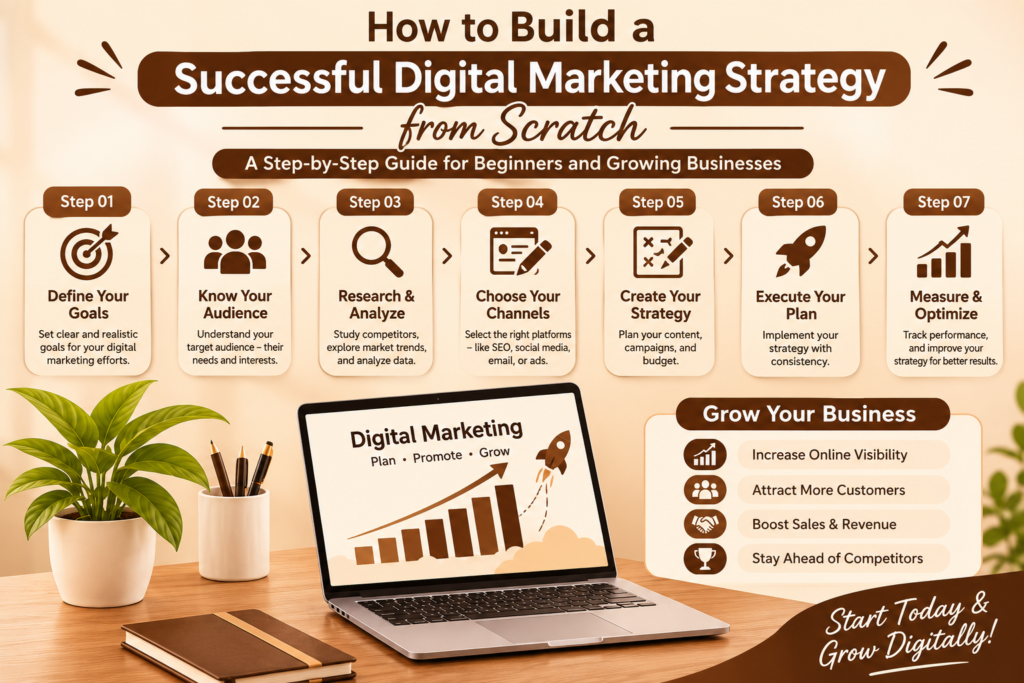
How to Create an Effective Marketing Strategy
Developing a marketing strategy becomes easier when you follow a structured process.
Step 1: Set Clear Marketing Goals
Start by deciding what you want your marketing to achieve. Your objectives might include increasing website traffic, generating qualified leads, improving brand awareness, or increasing sales.
Use measurable targets and realistic timeframes to evaluate progress.
Step 2: Research Your Audience
Understand your customers’ needs, preferences, questions, and challenges. Customer feedback, website analytics, and market research can help you make informed decisions.
Step 3: Analyze Your Competitors
Study relevant competitors to understand their positioning, content, services, and communication methods. Look for opportunities to offer clearer information, better customer experiences, or a more distinctive brand message.
Step 4: Choose the Right Marketing Channels
Select channels according to your goals and audience.
For example, SEO may support long-term search visibility, social media may help build awareness and engagement, and paid advertising may support campaigns with specific objectives.
Step 5: Develop a Content Plan
Plan what you will publish, where you will publish it, and how often you will communicate with your audience.
A content calendar can help maintain consistency and align posts with business priorities, seasonal events, and promotional campaigns.
Step 6: Set a Marketing Budget
Decide how much you can invest in content creation, advertising, website improvements, and other marketing activities.
Start with priorities that offer the strongest potential value for your business, then adjust your spending as performance data becomes available.
Step 7: Measure and Improve Performance
Track relevant metrics such as website visits, qualified enquiries, conversion rates, engagement, and return on advertising spend where applicable.
Use the results to refine your messaging, channels, content, and budget.
Digital Marketing Strategy for Small Businesses in Mannarkad
Small businesses do not always need a complicated marketing plan. A focused strategy based on their customers, location, and objectives can provide a practical starting point.
Consider a local bakery that wants to attract more customers. Its marketing strategy might include a Google Business Profile, location-focused website content, attractive product photography, regular social media posts, and seasonal promotions.
A freelance service provider could focus on building a professional website, publishing informative blog posts, sharing examples of completed work, and encouraging satisfied clients to provide genuine reviews.
The best approach depends on the type of business, available budget, target audience, and competition.
Marketing Strategy vs. Marketing Plan
Although these terms are closely related, they serve different purposes.
Marketing Strategy | Marketing Plan |
Defines the overall direction | Explains the activities needed to implement that direction |
Identifies the target audience and value proposition | Lists campaigns, tasks, channels, and timelines |
Establishes broad marketing priorities | Assigns budgets, responsibilities, and deadlines |
Guides long-term decisions | Organizes execution and measurement |
In simple terms, the strategy explains what you want to achieve and why, while the marketing plan explains how you will work towards it.
Common Marketing Strategy Mistakes to Avoid
Businesses can improve their marketing by avoiding several common mistakes:
- Promoting products without defining a target audience.
- Using every social media platform without a clear purpose.
- Publishing content without a consistent plan.
- Ignoring website usability and mobile experience.
- Spending on advertisements without tracking conversions.
- Focusing on likes and followers instead of meaningful business outcomes.
- Copying competitors without identifying your own strengths.
- Failing to review results and improve the strategy.
A successful strategy is not simply about doing more marketing. It is about choosing the right activities and learning from their performance.
Build a Stronger Business with Sajna.digital
A clear marketing strategy helps your business move beyond random promotional activities and focus on meaningful results. By understanding your customers, creating valuable content, choosing suitable digital channels, and monitoring performance, you can build a stronger brand and develop opportunities for sustainable growth.
At Sajna.digital, we aim to help businesses develop a consistent online presence through digital marketing, SEO, social media marketing, paid advertising, website development, and graphic design.
Whether you are launching a new business or improving an existing brand, we can help you explore marketing approaches that align with your objectives.
Ready to grow your business online?
Visit Sajna.digital to learn more about our services and get in touch to discuss your marketing goals.
Plan smarter. Market better. Grow with confidence
A marketing strategy is a plan that explains how a business will attract its target customers, communicate its value, and achieve its marketing goals.
A common framework is the four Ps: product, price, place, and promotion. Together, they help businesses plan what they offer, how they price it, where customers can access it, and how they promote it.
The best strategy depends on the business and its customers. Many small businesses benefit from a combination of local SEO, social media marketing, useful website content, and targeted advertising when appropriate.
Costs vary depending on the research, planning, creative work, channels, and implementation required. A small business may begin with a focused strategy and expand its activities as its needs and budget grow.
Success can be measured using relevant indicators such as qualified leads, sales, conversion rates, organic search traffic, customer acquisition costs, and campaign performance.
Sajna.digital focuses on digital marketing and graphic design services that can work together to strengthen your online presence. Contact us to discuss your business goals and identify suitable marketing opportunities.